 Alexander the Great: A New History
(BOOK): edited by Waldemar Heckel and Lawrence A. Tritle
- Written by leading experts in the field
- Looks at a wide range of diverse topics including Alexander’s religious views, his entourage during his campaign East, his sexuality, the influence of his legacy, and his representations in art and cinema
- Discusses Alexander’s influence, from his impact on his contemporaries to his portrayals in recent Hollywood films
- A highly informed and enjoyable resource for students and interested general readers
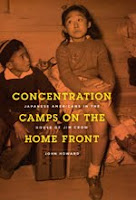
Concentration Camps on the Home Front: Japanese Americans in the House of Jim Crow (BOOK): by John Howard
Without trial and without due process, the United States government locked up nearly all of those citizens and longtime residents who were of Japanese descent during World War II. Ten concentration camps were set up across the country to confine over 120,000 inmates. Almost 20,000 of them were shipped to the only two camps in the segregated South—Jerome and Rohwer in Arkansas—locations that put them right in the heart of a much older, long-festering system of racist oppression. The first history of these Arkansas camps, Concentration Camps on the Home Front is an eye-opening account of the inmates’ experiences and a searing examination of American imperialism and racist hysteria.
From Habsburg Neo-Absolutism to the Compromise, 1849-1867 (BOOK): by Agnes Deak translated by Matthew Caples
In 1848, Francis Joseph became Emperor of the Hapsburg Monarchy, and the Russian army helped the Austrians take control of Hungary. The Austrian Council of Ministers ordered the arrest of all political and military officers of the Revolution and dissolved the Hungarian Kingdom. A planned constitution promised extensive rights to national minorities, and the October Diploma of 1860 suggested more convocations of the Imperial Parliament. However, in 1861 Francis Joseph suspended all constitutional organizations, introduced military jurisdiction, and appointed a governor as head of state. After he was crowned King of Hungary, though, Francis Joseph approved the Law of Compromise, and Hungary became independent with regard to public law and internal self-government. The Austro-Hungarian Dual Monarchy was then born.
 Good girls, Good food, Good fun: The Story of USO Hostesses During World War II (BOOK): by Meghan K. Winchell
Think of saddle-shoed coeds jitterbugging with the boys. The dance could be as sexually evocative then as grinding is now. It was all in a night's work for the thousands of young American women who volunteered to host soldiers in United Service Organizations clubs during WWII. The USO's domestic mission was to steer idle troops away from liquor, prostitutes and venereal disease, offering instead homemade cookies and wholesome smalltown girls. In constructing a portrait of wartime sexuality through the lens of the USO's American ideal of women, Winchell highlights what she views as the USO's middle-class prejudices. But she also offers studies of leadership in minority women's lobbying for such issues as canteen integration and access for women soldiers. Winchell, an assistant professor of history at Nebraska Wesleyan University, can't seem to let impressive research speak for itself, and her insightful observations are couched in the academic language of race, class, gender and the economics of women's work. The hostesses should have been the voice of this book—sometimes, they manage to be heard.
 Hamas vs. Fatah: The Struggle for Palestine (BOOK): by Jonathan Schanzer
Schanzer, director of policy at the Jewish Policy Center and counterterrorism analyst for the Office of Intelligence and Analysis at the U.S. Department of Treasury, investigates the conflict between rival Palestinian factions with nuance and detail as he exposes the long-broiling tensions and violent eruptions between Fatah and Hamas—even as the two sides attempted to pretend that the Palestinians were still united under one flag. The author posits that only by rejecting the platforms of both parties will the Palestinian people begin to break the self-destructive cycle and provides a concise historical survey from the founding of the Muslim Brotherhood—the template for many Islamist groups—in 1928 to the recent conflict in Lebanon and a thorough comparison of Fatah's and Hamas's leadership. Neophytes to the tangled world of Palestine's internal conflict will be treated to a serious, no-frills account; those readers more familiar with the issues will enjoy how Schanzer weaves a web of connectivity between the Palestinian conflict with Israel, the conflicts involving Lebanon, the rise of al-Qaeda and American complicity.
 Imperial Germany, 1871-1918 (BOOK): edited by James Retallack
The German Empire was founded in January 1871 not only on the basis of Chancellor Otto von Bismarck's "blood and iron" policy but also with the support of liberal nationalists. Under Bismarck and Kaiser Wilhelm II, Germany became the dynamo of Europe. Its economic and military power were pre-eminent; its science and technology, education, and municipal administration were the envy of the world; and its avant-garde artists reflected the ferment in European culture. But Germany also played a decisive role in tipping Europe's fragile balance of power over the brink and into the cataclysm of the First World War, eventually leading to the empire's collapse in military defeat and revolution in November 1918.
 Iran's Intellectual Revolution (BOOK): by Mehran Kamrava
Since its revolution in 1979, Iran has been viewed as the bastion of radical Islam and a sponsor of terrorism. The focus on its volatile internal politics and its foreign relations has, according to Kamrava, distracted attention from more subtle transformations which have been taking place there in the intervening years. With the death of Ayatollah Khomeini a more relaxed political environment opened up in Iran, which encouraged intellectual and political debate between learned elites and religious reformers. What emerged from these interactions were three competing ideologies which Kamrava categorises as conservative, reformist and secular. As the book aptly demonstrates, these developments, which amount to an intellectual revolution, will have profound and far-reaching consequences for the future of the Islamic republic, its people and very probably for countries beyond its borders. This thought-provoking account of the Iranian intellectual and cultural scene will confound stereotypical views of Iran and its mullahs.


